-
-
OSVALDO MARISCOTTI
VIEW MOREOsvaldo Mariscotti (b.1960) is a distinguished printmaker, painter, and sculptor whose prolific career spans over four decades. Internationally recognised for his iconic visual language, Mariscotti’s practice is grounded in a rigorous exploration of perception through the interplay of form and colour.
Drawing from the formal vocabulary of Suprematism, particularly the straight line and square, Mariscotti privileges man-made geometry over organic forms. His compositions often emerge through the systematic deconstruction of figures such as the rectangle, reduced to essential coloured lines set against stark black grounds. This process places him firmly within the context of geometric conceptualism: an aesthetic that eschews figuration in favour of abstraction and synthesis, searching for a new visual code through disciplined formal reduction.
Works by Mariscotti are held in major private and public collections, including the Galleria Nazionale d'Arte Moderna, Rome; the U.S. Department of State, Washington, D.C.; the UBS Art Collection; the Washington County Museum of Fine Arts, Maryland; and the Asheville Art Museum, North Carolina.
In 2015, Mariscotti participated in Grazie Italia, an exhibition at the Officina delle Zattere in Venice, endorsed by the Pavilion of Grenada and Guatemala of the 56th Venice Biennale, presenting his now-iconic Book of Color I. His work has been widely exhibited in solo and group exhibitions at leading institutions including the MIIT Museum, Turin; Malzfabrik, Berlin; Chianciano Museum of Art, Chianciano Terme; Galata Museum, Genoa; the European Museum of Modern Art (MEAM), Barcelona; Canova Museum, Possagno; and the Museum of Contemporary Art Giuseppe Sciortino, Monreale.
-
-
JOSEF ALBERS
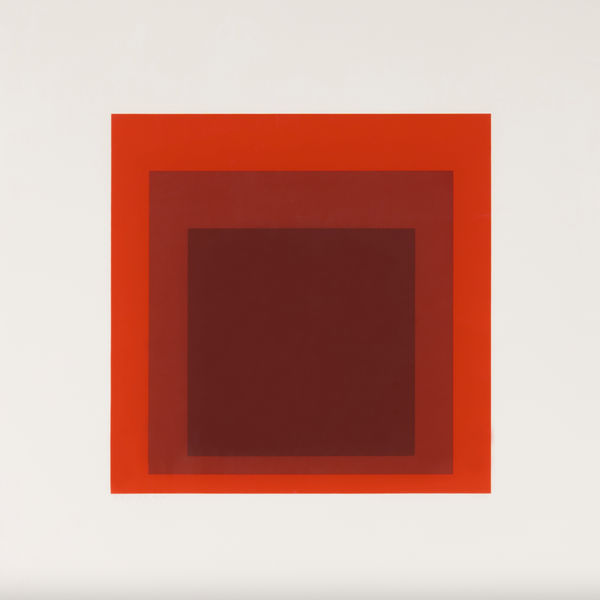
VIEW MOREJosef Albers (b. 1888) played a key role in spreading modernist ideas, especially those of the Bauhaus movement, and helped shape the course of American modern art in the mid-1900s. He grew up learning practical skills from his father, a general contractor, which gave him a hands-on understanding of materials–this remained central to his art throughout his life.
Albers was born on March 19, 1888, in Bottrop, Germany. He began his formal art studies at the Bauhaus school in Weimar in 1920, where he experimented with stained glass, exploring how colors interact with each other—a theme that would define his career. His talent quickly stood out, and by 1923 he was invited to join the Bauhaus faculty. Just two years later, he became one of the school’s leading instructors.
When the Nazis forced the Bauhaus to close in 1933, Albers moved to the United States. He began teaching at Black Mountain College in North Carolina, an influential school known for its experimental approach to art and education. Later, he became the head of the design department at Yale University. In both roles, he emphasized careful, hands-on exploration, pushing students to think critically about how we see and understand visual elements—especially color.
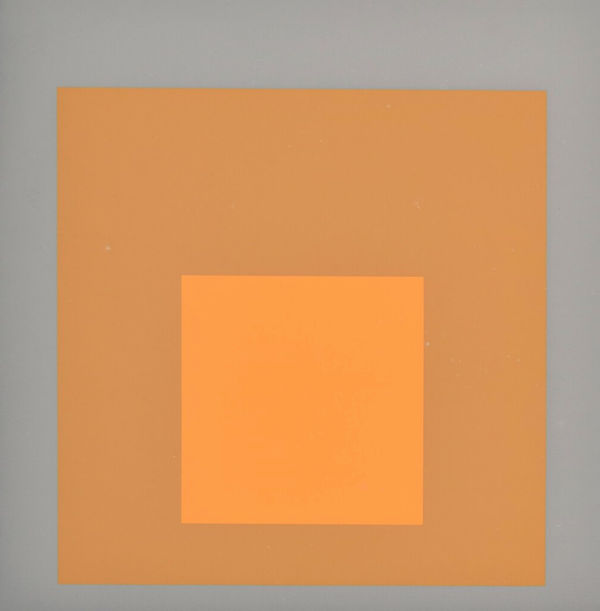
One of his most famous projects, Homage to the Square, features simple square shapes in different colors. These paintings demonstrate how colors can change based on what’s around them, challenging the idea that the perception of color is fixed. For Albers, color was about context—how one shade might look different next to another. His 1963 book Interaction of Color became a landmark guide for artists and designers and is still widely used today.
Albers’ work was celebrated during his lifetime. In 1964, the Museum of Modern Art in New York held a major exhibition of Homage to the Square, and in 1971, the Metropolitan Museum of Art honored him with a full career retrospective—the first time they did so for a living artist. Through both his teaching and his art, Albers helped shift the focus of modern art toward exploring how we perceive the world visually. His clear, geometric style and deep study of color continue to influence artists and educators around the world.
-
-
WILLARD BOEPPLE
VIEW MOREWillard Boepple (b. 1945) is an American sculptor and printmaker known for rigorously abstract yet deeply human constructions in wood, aluminum, resin, and steel. Boepple grew up in California, where he first began making art in his teens. He studied at the Skowhegan School of Painting & Sculpture, the University of California, Berkeley, and the Rhode Island School of Design, earning his BFA from City College of New York. After assisting Isaac Witkin at Bennington College, he taught at the School of the Museum of Fine Arts, Boston, and later established studios in New York and Vermont.
Influenced by the late Anthony Caro and grounded in the modernist lineage of Picasso, González, and David Smith, Boepple has developed a personal sculptural vocabulary rooted in the additive logic of joinery and the human relationship to structure. His art registers the scale of the human body and its ordinary operations, creating works that, though abstract, remain connected to human presence. Often described as “musical” and “polyphonic,” his sculptures invite viewers to move around them and to experience their unfolding logic in time and space. There is always a sense of implied movement, as if each form were caught in the midst of a gesture, yet every piece strives toward a condition of “rightness,” a poised equilibrium between tension and resolution.
Boepple’s major series, Ladders, Shelves, Looms, Temples, Towers, Rooms, and Trestles, begin from simple structural premises and evolve through variation, folding, and recomposition. The Ladders transform function into rhythm and ascent; Little Rhum (1989), for instance, turns the ladder motif into a syncopated climb, with evenly spaced uprights that read as rhythm as much as structure, placing it firmly within Ladders. From that measured cadence, the work moves to Shelves, which treat containment as a sculptural idea, holding space rather than objects and setting the stage for Looms; in Pony (2025), interlaced slats form a taut open grid that turns the weave itself into a spatial framework. Temples gather this clarity inward, compact and contemplative, while Towers lift it into vertical poise; Backstay (2014) rises through stacked members that stabilize as they ascend. Rooms articulate thresholds between architecture and abstraction, and Trestles extend the language toward motion, where engineered order inclines toward the organic. Together, the series balances clarity and complexity, discipline and intuition, precision and lyrical unpredictability.
Boepple has, since the early 1990s, used translucent resin and color as active structural agents, allowing light to reveal inner geometry and spatial rhythm. His parallel printmaking practice, developed from 2004 with the late master printer Kip Gresham in Cambridge, England, extends these concerns through layered monoprints that “build with color.” In 2023, the Shards series was presented by Upsilon Gallery, New York, as an online viewing room, a group of wall mounted reliefs that merge sculpture and print and intensify the dialogue among structure, color, and perception.
Boepple was elected to the National Academy in 2010 and became a Fellow of the Royal Society of British Sculptors in 2001. He has also served on the boards of the National Academy of Design and the Vermont Studio Center. His monograph Willard Boepple: The Sense of Things (Lund Humphries, 2014), with essays by Karen Wilkin and a foreword by Michael Fried, offers the most comprehensive study of his work, situating it within modernist abstraction while underscoring his distinct contribution.
-
-
FRANK STELLA
VIEW MOREFrank Stella (1936-2024) was a pivotal figure in postwar American art and a central catalyst for the emergence of Minimalism. Rising to prominence in the late 1950s with his Black Paintings, he challenged the gestural, emotionally charged language of Abstract Expressionism and advanced a radically different idea of what painting could be. Stella insisted that a painting should be understood as an object in its own right, not as a vehicle for narrative or symbolism, summarizing his position in the now canonical statement: “What you see is what you see.”
In the Black Paintings, Stella used commercial enamel and a house painter’s brush to apply evenly spaced black stripes on raw canvas, leaving thin bands of unpainted canvas between them, a deliberate reduction of means that stripped away illusion, gesture, and external reference and helped define the visual language of Minimal art. Four of these works appeared in the Museum of Modern Art’s landmark exhibition Sixteen Americans in 1959, a pivotal moment for both his career and the broader move beyond Abstract Expressionism. Stella’s practice continued to expand in ambition, from the shaped canvases of the 1960s, including the Protractor series, to the complex reliefs and large-scale constructions of later decades that merged painting, sculpture, and engineered form. By the 1980s and 1990s, particularly in the series inspired by Herman Melville’s Moby-Dick, he developed spatially intricate works that often began as small studio collages or models and were later enlarged through digital modeling and industrial fabrication, reflecting his ongoing interest in new materials and technologies within a fundamentally exploratory studio process.
Central to Stella’s philosophy was a distrust of over-interpretation and a commitment to visual clarity. He consistently resisted symbolic readings of his work, arguing that its meaning resided in what was physically present to the eye. At the same time, his thinking about abstraction was deeply informed by art history and theory. In the mid 1980s he delivered the Charles Eliot Norton Lectures at Harvard, later published as Working Space, in which he argued for a renewed ambition in abstract painting and engaged closely with the spatial complexities of baroque art. This dual position, both anti-illusionistic and historically aware, has made Stella an essential reference point for artists and thinkers working in the wake of modernism.
Born in Malden, Massachusetts, Stella studied at Phillips Academy, Andover, and at Princeton University, where he took art history and painting courses before moving to New York. There he supported himself by painting houses while developing the work that would transform his field. Over the course of his career he received numerous honors, including the National Medal of Arts in 2009, and his work has been the subject of major retrospectives at institutions such as the Museum of Modern Art and the Whitney Museum of American Art. His works are held in many significant public collections, among them the Menil Collection, Houston; the Hirshhorn Museum and Sculpture Garden, Washington, D.C.; the San Francisco Museum of Modern Art; the National Gallery of Art, Washington, D.C.; the Toledo Museum of Art; and the Whitney Museum of American Art, New York.
-
-
ELLSWORTH KELLY
VIEW MOREEllsworth Kelly (1923–2015) is recognized as one of the most influential artists of the postwar period and a defining figure in American abstraction. Over seven decades, he shaped the development of Minimalism, Color Field painting, hard-edge abstraction, and aspects of Pop Art through his commitment to clarity of form, saturated color, and the suppression of expressive gesture. Guided by an intense observational practice, Kelly believed that form already existed in the world and that the artist’s role was to isolate and reveal it. This philosophy became central to his mature vocabulary and positioned him as a key voice in the evolution of abstraction after World War II.
Kelly’s artistic direction was profoundly shaped by his years in postwar France from 1948 to 1954, where influences ranging from Romanesque architecture to the work of Matisse, Arp, and Brancusi encouraged him to break from gestural American painting. During this period he developed shaped canvases, modular compositions, and sharply defined fields of color. His early landmark work Colors for a Large Wall (1951) demonstrated his interest in seriality, geometric division, and the visual impact of pure color.
Throughout the 1960s and 1970s Kelly refined a language of crisp contours and radiantly flat color derived from close attention to the built and natural environment. Architectural fragments, shadows, and plant forms became sources for paintings and sculptures that emphasize spatial clarity and visual balance. Alongside these works, he maintained an extensive drawing practice. His contour drawings of figures, plants, and flowers reveal a delicate sensitivity to line and underscore the observational foundation of his more reductive abstractions.
Born in Newburgh, New York, Kelly studied at the Pratt Institute, the School of the Museum of Fine Arts, Boston, and the École des Beaux-Arts in Paris on the G.I. Bill. After returning to the United States, he continued to expand his formal vocabulary across painting, sculpture, drawing, and printmaking. His work is represented in major public collections worldwide, including the Museum of Modern Art, New York; the Whitney Museum of American Art, New York; the Art Institute of Chicago; the San Francisco Museum of Modern Art; the Centre Pompidou, Paris; the Tate, London; and the National Gallery of Art, Washington, D.C. Kelly received numerous honors, including the National Medal of Arts in 2013.
Across his career, Kelly established a vision of abstraction grounded in perception, precision, and the conviction that simplicity can generate profound visual and spatial experience. His influence continues to shape artistic approaches to form and color in contemporary practice.
HARD-EDGE: Osvaldo Mariscotti, Josef Albers, Willard Boepple, Frank Stella, Ellsworth Kelly
Past viewing_room